Elegant Floral Wedding Invitations: Your Beautiful Editable Template
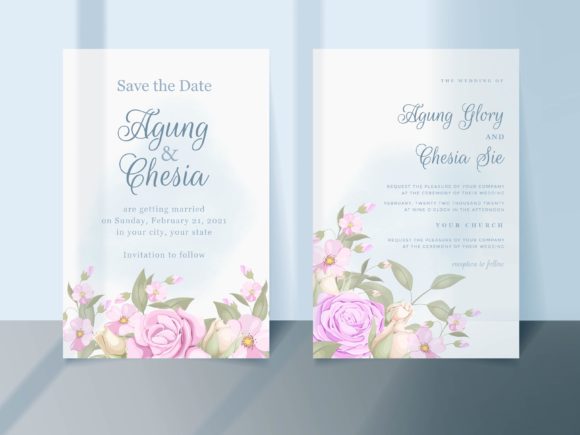
There is a specific kind of stress that comes with wedding planning, particularly when it comes to the paper goods. You want the invitation to set the tone for the entire event—to whisper elegance, romance, and intention before the guest even reads a single word. But let’s be honest: commissioning a bespoke calligrapher and illustrator to design a suite from scratch is often a luxury budget that simply isn't there. This is exactly where high-quality, editable design assets step in to bridge the gap between a dream aesthetic and a realistic timeline. We are looking at a collection of Floral Wedding Invitation Card Templates that utilize beautiful floral vectors featuring detailed roses and foliage, offering a practical solution for couples who want control over their stationery without sacrificing that high-end, boutique look.
The beauty of this particular set lies in the balance between structure and softness. The design relies on hand-drawn floral vector illustrations—specifically roses and trailing leaves—that frame the content without overwhelming it. It doesn't feel like a rigid, corporate print-out; it feels organic. The personality of these templates leans heavily into a romantic, garden-party aesthetic. If your wedding vibe is "enchanted evening," "rustic chic," or "classic garden," these vectors speak that visual language fluently. The interplay between the structured layout of the text and the free-flowing nature of the botanical elements creates a visual hierarchy that guides the eye naturally. You have your typography sitting quietly in the center, supported by the vibrant, detailed line work of the leaves and petals surrounding it. It is a design strategy that feels expensive because it prioritizes negative space and illustration quality over clutter.
Beyond the Wedding: Versatile Applications for Designers and Creatives
While the immediate application is obvious—printing invitations for a ceremony—these assets are far more versatile than they might first appear. If you are a graphic designer, a stationery business owner, or a creative entrepreneur, this is not just a one-time-use file. The value of a premium font or template lies in its adaptability across different media. Because the floral vectors are high-quality illustrations, they can be repurposed for a variety of projects beyond the initial wedding suite.
Think about the broader market for a moment. Brand identity is increasingly moving toward organic, human-centric aesthetics. These floral elements are perfect for:
- Editorial Design: Imagine using the rose motifs as spot illustrations in a lifestyle magazine or a blog header for a post about spring gardening or home decor.
- Packaging Design: For small business owners selling artisanal goods—soaps, candles, or tea—the delicate leaf vectors can easily wrap around a cylindrical label or adorn a gift box, elevating the product's perceived value instantly.
- Social Media Graphics: In the age of Instagram and Pinterest, visual consistency is king. These templates can be broken down into individual elements to create cohesive story highlights, quote cards, or promotional banners for a florist or event planner.
- Web Design: Subtle background patterns using the leaf elements can add texture to a website footer or a "Coming Soon" landing page, offering a touch of elegance without slowing down load times with heavy images.
The key takeaway here is that you aren't just buying a piece of paper; you are acquiring a library of design assets. The vectors included in these templates are scalable, meaning they won't pixelate whether you use them on a tiny business card or a large-format event banner. For content creators and bloggers, having access to such specific, high-quality botanical illustration solves the constant headache of sourcing unique stock imagery.
The Psychology of Florals in Brand Perception
Why do florals work so well in design? It goes deeper than just "looking pretty." There is a psychology behind using organic shapes and botanical imagery in modern typography and layout. When we see roses and leaves, we subconsciously associate them with growth, care, nature, and attention to detail. For a brand—whether personal or commercial—using these elements signals that you value aesthetics and are willing to put in the effort to create a beautiful experience for your audience.
In terms of visual hierarchy, the floral elements in these templates act as visual anchors. They draw the eye to the center of the card where the text lives. This is a crucial technique in graphic design; you want the "noise" to frame the "signal." If the text were floating on a blank page, it might feel stark or unfinished. The addition of the vector roses and leaves softens the edges, making the information feel more approachable and intimate.
Furthermore, the use of these templates aids in brand consistency. If you are a small business owner creating a lookbook or a set of thank-you cards, using a consistent floral motif across all your touchpoints reinforces your brand identity. It becomes recognizable. Customers start to associate that specific style of illustration with your service. It builds a sense of professionalism that says, "I have thought about my visual presentation." It’s a subtle form of marketing that builds trust before a word is read.
Practical Guidance: Customization and Personalization
One of the biggest hurdles with digital templates is the fear of the blank canvas. People often buy a template and then freeze, unsure of how to make it their own. The beauty of this specific set of Floral Wedding Invitation Card Templates is that the heavy lifting—the illustration and the composition—is already done for you. Your job is simply to inject your personality into the text and color palette.
Here is a practical approach to personalizing these files to ensure they look professional:
- Evaluate the Typography: The template likely comes with a suggested font pairing. However, if you want to change it, stick to the principles of contrast. If the floral elements are busy and detailed, choose a clean sans serif font for the body text to ensure readability. You can pair this with a script font for the names, but ensure the script isn't so "swirly" that it gets lost in the leaves.
- Color Palette Adjustment: The default colors might not match your wedding or brand colors. Don't be afraid to change the hue of the floral vectors. Soft pastels work for spring, while deep burgundies and forest greens look stunning for autumn weddings. Ensure there is enough contrast between the text and the background so the invitation is legible in low light.
- Testing and Proofing: Never print without testing. View the file at 100% zoom on your screen. Does the text look too small? Are the margins wide enough for the printer’s bleed area? If you are using this for a logo design or branding element, ensure the vectors are separated from the text layers so you can scale them independently.
If you find yourself struggling with the software or the layout, remember that you don't have to figure it out alone. We are here to help. Contact us on our social media account if you need some help to personalize specifically for your project. Whether it's adjusting the spacing, changing a color, or understanding which layers to unlock, a quick message can save you hours of frustration. We want you to feel confident that the final result is exactly what you envisioned.
Final Thoughts on Usability and Style
Ultimately, the goal of any creative font or design asset is to make your life easier while making your project look better. These Floral Wedding Invitation Card Templates hit that sweet spot of being visually sophisticated yet surprisingly accessible to edit. They bridge the gap between premium font quality and the DIY spirit. Whether you are a bride-to-be crafting your own suite, a graphic designer looking for editorial design elements, or a small business owner refining your packaging design, the versatility of these floral vectors is undeniable.
By leveraging the natural elegance of roses and the grounding effect of leaves, you tap into a design language that is universally understood: beauty, care, and attention to detail. Don't just settle for a generic invite or a plain business card. Use these tools to create something that feels intentional, polished, and uniquely yours.